

-
Services
Services
- In-patient Service
- Emergency & Outpatient
-
Clinical Specialties
Clinical Specialties
- Emergency Medicine
- Obstetrics & Gynaecology
- Reproductive Medicine
- Surgery
- Orthopaedics & Traumatology
- Internal Medicine
- Oncology
- Ophthalmology
- Otorhinolaryngology
- Paediatrics
- Allergy Specialty Service
- Dental
- General Practice / Family Medicine
- Psychiatry / Psychology
- Radiology / Medical Imaging
- Pathology
- Anaesthesiology
- Other Health Services
-
Medical Centres
Medical Centres
-
Union Hospital (Tai Wai)
Union Hospital (Tai Wai)
- Union Emergency Medicine Centre
- Union Minimally Invasive Centre
- Paediatrics / Well Baby Clinic
- Breast Centre
- Union Health Maintenance Centre
- Union Endoscopy and Day Surgery Centre
- Union Integrated Liver Centre
- Union Heart Centre
- Endocrinology & Diabetes Clinics
- Union Renal Dialysis Centre
- Union Ophthalmology Centre
- Union Audiology Centre
- Union Orthopaedic & Trauma Centre
- Union Hospital Dental Centre
- Union Plastic and Aesthetic Multidisciplinary Centre
- Union Hospital Allergy Centre
- Professorial Clinic
- Tsim Sha Tsui (H Zentre)
- Tsim Sha Tsui (Mira Place)
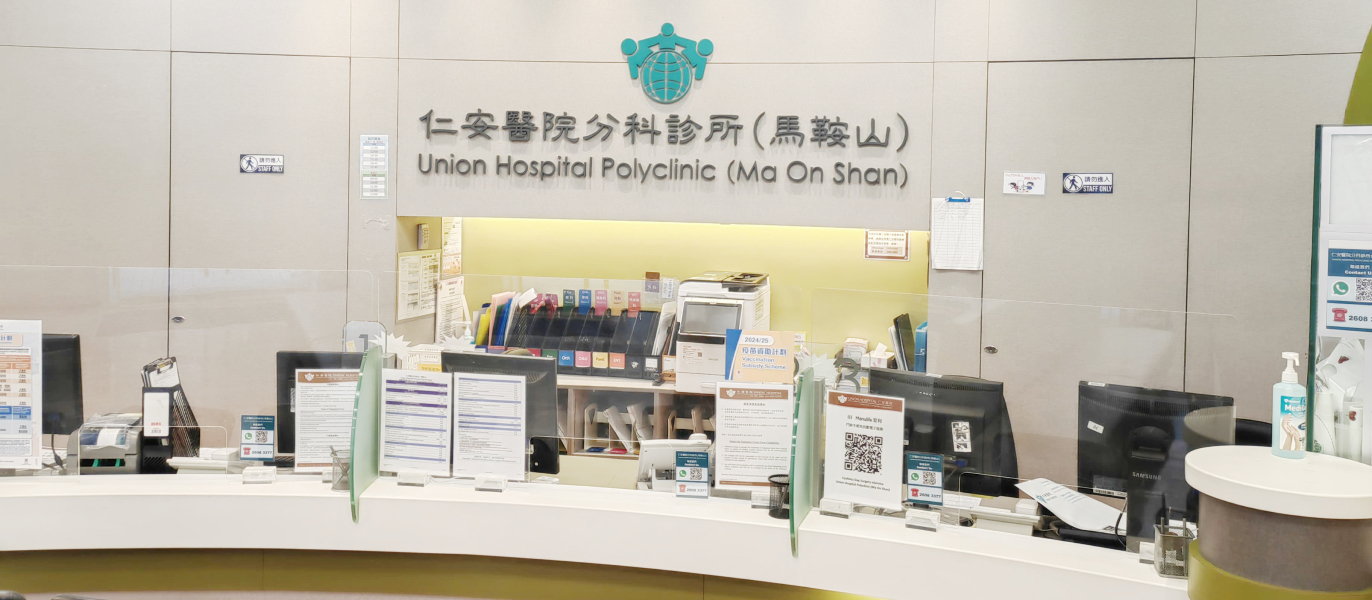
- Polyclinics
-
Union Hospital (Tai Wai)
- Health Professionals
-
Patients & Visitors
Patients & Visitors
-
Service Fees & Packages
Service Fees & Packages
-
For Health Professionals
For Health Professionals
-
About Us
About Us